
What great sales leadership can teach multifamily about resident satisfaction


Why a conversation about sales strategy matters for operators, marketers, and onsite teams
When Kevin Ducey, Regional Sales Director at Updater, sat down with Tony Sousa, Entrepreneur and Multifamily Influencer, the conversation wasn’t only about sales strategy. It was a window into how strong leadership, empathy, and the removal of friction can transform relationships. Those same principles show up every day on site, shaping both leasing team performance and resident satisfaction.
Kevin described how meaningful it was to join a company that gives trust instead of micromanagement. He said, “They ask me, ‘How would you handle this?’ ‘Where would you do this?’ Or when I bring an idea, they’re like, ‘Let’s try it. Let’s do it.’”
That kind of trust gives people room to thrive. Operators know the same thing: empowered teams create better resident experiences. When onsite teams have tools that remove busywork and leaders who back them, they show up differently. Problems get solved faster. Interactions feel more human. Residents notice.
Empathy isn’t optional
His mentor treated sales like a science, and Kevin treats it like an art. The common denominator of their approach was empathy.
As Kevin puts it, “He (his mentor) would break it down. What are the challenges I think they’re going through? What do I envision their problems could be? What am I seeing in their industry? He would do that work.”
Great leasing and marketing teams do the same. Understanding residents on a deeper level leads to smoother move-ins and happier long-term outcomes. And it’s this same mindset that inspired Updater in the first place. Kevin explains, “It was built because our CEO was moving five blocks as a corporate attorney in New York City, and it was a mess. He said, ‘This is nuts. I need to build a platform to help people in this process.’”
Empathy built the product. Empathy fuels the teams that use it.
Friction kills relationships. Removing it changes everything
Kevin talks openly about timing, complexity, and the emotional side of engagement, “Ninety percent of the time you get told no or get ghosted, it’s not about you. It’s timing.”
Residents experience the same thing during a move-in. They’re overwhelmed. They’re juggling dozens of tasks. They’re trying to keep up.
The less friction onsite teams and residents face, the better the relationship starts.
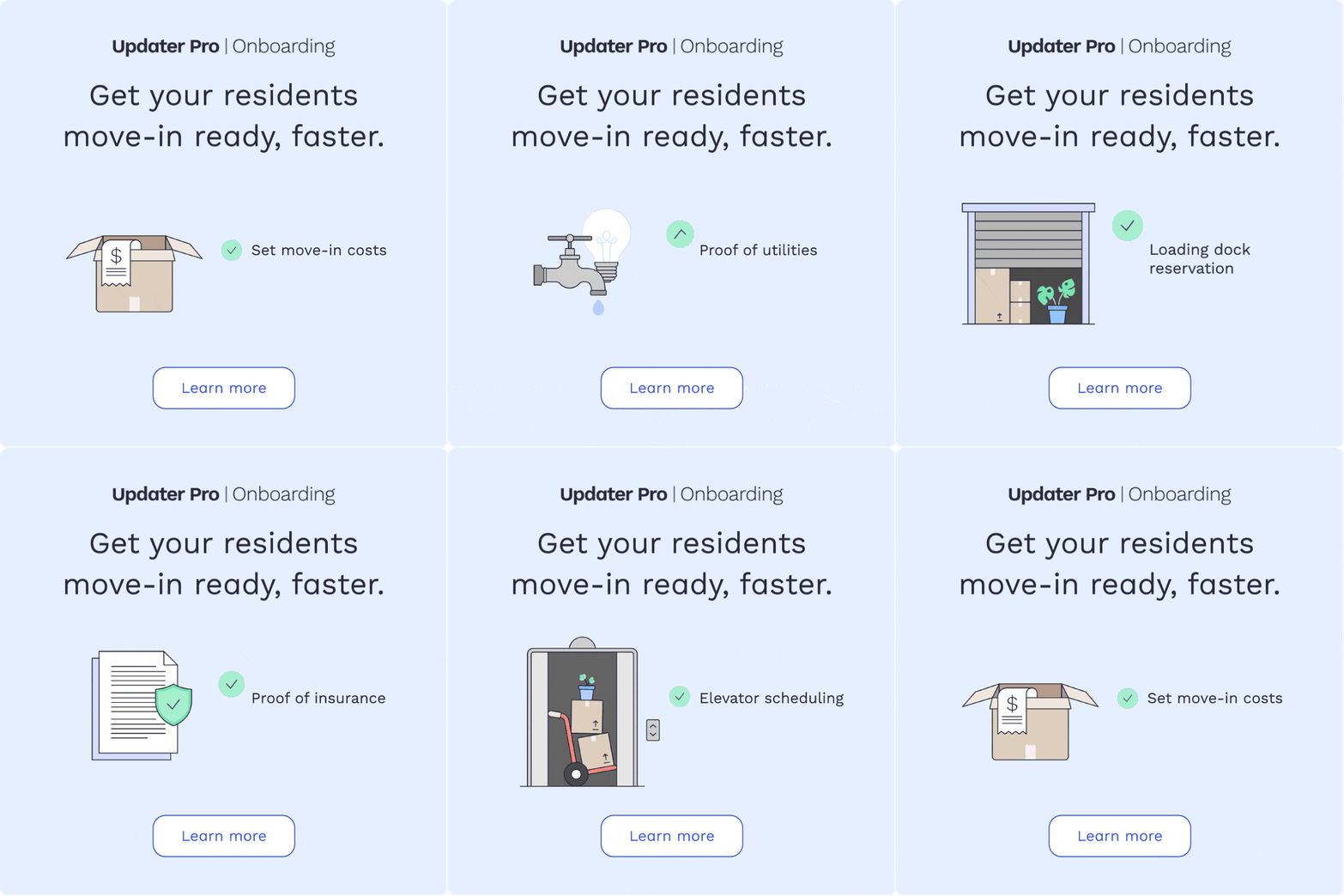
Updater plays directly into this. With proof-of-insurance uploads, pet documentation, and customized move-in tasks flowing right into the property management system, leasing teams can spend more time connecting and less time chasing paperwork. As Kevin says, “Now that it’s (Updater) able to integrate, the residents can send in their proof of insurance, their proof of pet registration, all the customized link outs. It goes right into the system. The leasing team simply has to hit yes.”
That is, friction removed. And friction removed leads to happy residents.
People first, always
One of Kevin’s strongest points in the interview is that people are driven by meaning, not money. As he puts it, “Very few people are actually money motivated. Money serves a purpose for other things they care about.”
What matters is understanding what actually motivates them and connecting to that.
This applies directly to onsite teams. They’re not motivated by technology for technology’s sake, they’re motivated by being able to do their jobs well, support residents, and avoid unnecessary stress. Tools that remove clutter (like document chasing or repetitive onboarding tasks) help them stay focused on the human side of the job.
That ultimately impacts the resident experience: when teams feel less overwhelmed, they show up with more patience, clarity, and empathy during one of the most stressful moments in a resident’s journey.
Leadership lessons that stick
Kevin leaves listeners with a reminder that applies to every part of multifamily, “The number one customer is the people that work for me because they do all the work I don’t want to do. When you become a leader, that’s what you’re responsible for.”
Operators know that when teams feel supported, residents feel supported. When teams are burnt out, residents absorb that too.
Leaders who remove friction and build trust unlock a better resident experience without having to push harder.
And that’s the heart of the message:
Good sales leadership is good people leadership.
Good people leadership is the foundation of resident satisfaction.
More Industry Insights

What we’ve learned about writing resident welcome letter emails
25 March 2026
Telecom isn’t ecommerce – it’s infrastructure
17 March 2026