

The real risk in switching property technology


And why “doing nothing” often feels safer than it should
Most community teams don’t avoid new technology because they’re resistant to change. They avoid it because they’ve lived through bad change.
They’ve seen:
- Tools rolled out with big promises and little support
- Systems that added work instead of removing it
- Vendors that disappeared once the contract was signed
So when the idea of switching comes up, the hesitation is understandable.
Switching feels risky because move-ins are important
Move-in is not the place most teams want to experiment. It’s time-sensitive. It’s resident-facing. And when something breaks, it breaks loudly.
The fear usually isn’t about cost. It’s about questions like:
- Will this confuse residents?
- Will my team have to relearn everything?
- What happens if something goes wrong on day one?
Those concerns are valid.
The biggest risk isn’t switching. It’s disruption
The real risk teams worry about is disruption:
- Disrupting existing workflows
- Disrupting resident communication
- Disrupting trust with residents and staff
That’s why “rip and replace” projects feel so daunting. They raise the stakes immediately. But not all change has to work that way.
Smaller, intentional changes reduce risk
One way teams reduce switching risk is by choosing tools that:
- Slot into existing workflows
- Focus on a specific problem
- Don’t require retraining the entire organization
- Don’t force residents to relearn everything at once
These tools don’t replace your systems of record. They support them. Because the scope is smaller and the role is clear, the risk feels manageable.
Residents are open to change when it helps them
Like onsite teams, residents don’t resist change automatically.
They resist confusion.
Residents are willing to sign up for something new if:
- It’s clearly explained
- It makes move-in easier
- They know where to go for help
When a new tool becomes the clear guide through move-in, it often feels like a relief rather than a burden.
Support is what makes or breaks a switch
One of the most overlooked parts of switching risk is support.
Teams aren’t only evaluating software. They’re evaluating:
- Who helps when something breaks
- How quickly they respond
- Whether they understand multifamily realities
Tools backed by responsive, human support lower risk because teams know they won’t be on their own. That confidence matters just as much as features. It’s important to know your tech partner will be there to support you, like Updater, with a 4.9-star Customer Support rating on Revyse.
Anytime we need something, the response time has been incredible. The team makes time to address any concerns and also identify solutions.
“Anytime we need something, the response time has been incredible. The team makes time to address any concerns and also identify solutions.”
Jami A.
Director of Training and Support
Middleburg Communities
The takeaway
Sticking with the status quo can feel safe, even when it’s frustrating. But switching doesn’t have to mean betting everything on a massive platform or overhauling your entire operation. When change is intentional, scoped, and supported, it becomes a step forward rather than a leap of faith.
Sometimes the safest move isn’t doing nothing. It’s choosing the right place to start.
See what residents have to say about Updater
See what community teams have to say about Updater
More Industry Insights
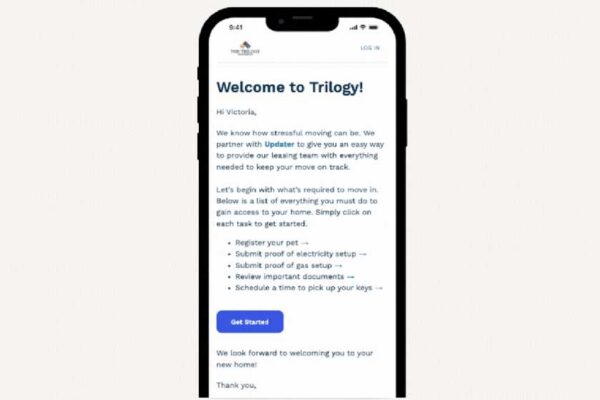
What we’ve learned about writing resident welcome letter emails
25 March 2026

Telecom isn’t ecommerce – it’s infrastructure
17 March 2026